
Two Interviews, Two Films: Origins of an Activist and Taking Off
(1) Origins of an Activist
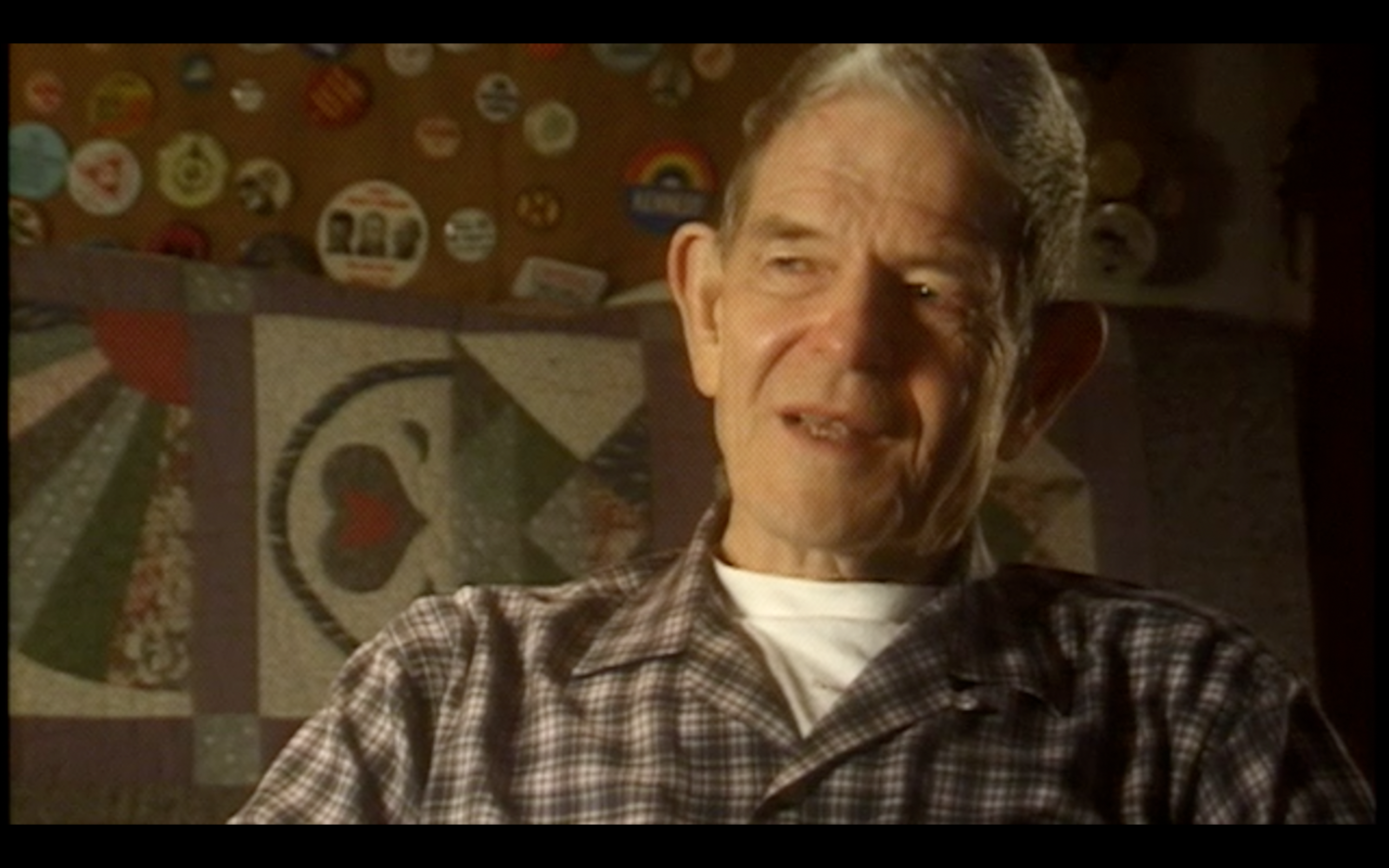 Staughton Lynd is an activist who has taken part in civil rights, anti-war and labor movements in the US. Lynd was born in Philadelphia in 1929 to parents who were quakers and socialists. His upbringing had an important effect on his beliefs and his lifelong pacifism. He worked with SNCC (Student Nonviolent Coordinating Committee) in the south to support civil rights and protested the war in Vietnam. Ever since he has been an active advocate for labor groups even today.
— Sam Register
Staughton Lynd Transcription 1
Staughton Lynd: Origins of an Activist
This clip looks at the events an d experiences that inspired Staughton Lynd to believe he could make change in his society. It starts with his time living in a socialist, religious commune in Georgia and goes through his time in nonviolent movements and civil rights.
(2) Taking Off
In Taking Off, Staughton Lynd and Howard Zinn discuss the difficulties faced by people trying to start a large social movement.
Staughton Lynd and Howard Zinn both taught at Spelman University in the early 1960s, and both of them aided in student activism on and off campus. Lynd, a close friend of Howard Zinn, discusses Spelman University and the student sit ins conducted by the students of Spelman in Atlanta during the early 60s. Both he and Zinn talk about the difficulties and threats faced by students as a result of these sit ins, and each of them talks about the possibility of being arrested or beaten by the police or by thugs who wanted to stop the protests. Lynd goes on to talk about how even after these traumatic events off campus, students often returned to find the administration of Spelman to be even more repressive. He talks about Zinn’s role in advocating for the students against the president and administration of Spelman, and about the feeling of constant threat against student movements.
Lynd continues to say that no single group can enact massive social change. The power of these movements cannot come from a single group or minority. All groups advocating for change need to communicate and coordinate their efforts in order to achieve their goals. The authoritarian resistance to social movements is so fierce in the early stages of those movements that they cannot hope to survive without communicating. Communication also needs to be between authority and the people. Communication between only activist groups simply isn’t enough in order to make definitive change, the government must also be persuaded. And the best way to do that is to unite the people.
Staughton Lynd: Taking Off
Staughton Lynd and Howard Zinn discuss the difficulties faced by people trying to start a large social movement.
Staughton Lynd Transcription (2)
— James Sutherland
